Not rated yet
Yes. MegaForm can work with data that already exists in a SQL table or view, generate a form schema from its columns, and present the records in MegaForm's grid. The safest implementation separates reading the existing data from replacing the old data-entry form.
Choose the right migration track
| Goal | Recommended approach | Result |
|---|
| Browse an existing table or view | Bind it to MegaForm in read-only mode | Existing rows appear in the MegaForm submissions grid without being copied |
| Create a new replacement form | Build a native MegaForm form, then map its fields and automation explicitly | New submissions follow the validation, conditional logic, notifications, and workflow you define |
| Recreate an existing MegaForm design | Import a MegaForm template JSON | Fields, layout, validation, and supported workflow settings travel together |
Raw database rows describe values and column types; they do not describe the original form's labels, validation messages, conditional logic, permissions, or approval workflow. For that reason, MegaForm does not pretend that a table alone is a complete editable replacement form.
Connect and inspect the existing data
- In the MegaForm dashboard, open Settings → Database Settings.
- Add a reusable named SQL connection and click Test Connection. Database credentials stay on the server; they are not sent to form visitors.
- Open the target form in Form Builder → Data → DB Tables and choose that connection.
- Find the table or view and click Capability.
- Review the machine-generated verdict before creating anything. It shows the detected key, approximate row count, column types, and whether detail, sorting, search, server-side filtering, insert, edit, delete, and export are safe for that object.
If the object is usable, choose Create form (machine-generated). MegaForm builds the schema from the live columns and binds the form in read-only mode. The dashboard reads the source table directly; it does not duplicate the customer data in MegaForm.
The optional Design with AI route can improve labels and presentation, but the generated blueprint is validated against a fresh database probe before it is applied. If the AI proposal does not pass validation, MegaForm falls back to the deterministic machine-generated version.
Use the records grid
Open Submissions for the bound form. The same grid used for native MegaForm submissions is available for the external records:
- free-text search, with an optional field scope;
- filter chips and reusable filter presets;
- configurable visible columns;
- server-side paging for large tables;
- export and reporting actions allowed by the capability result.
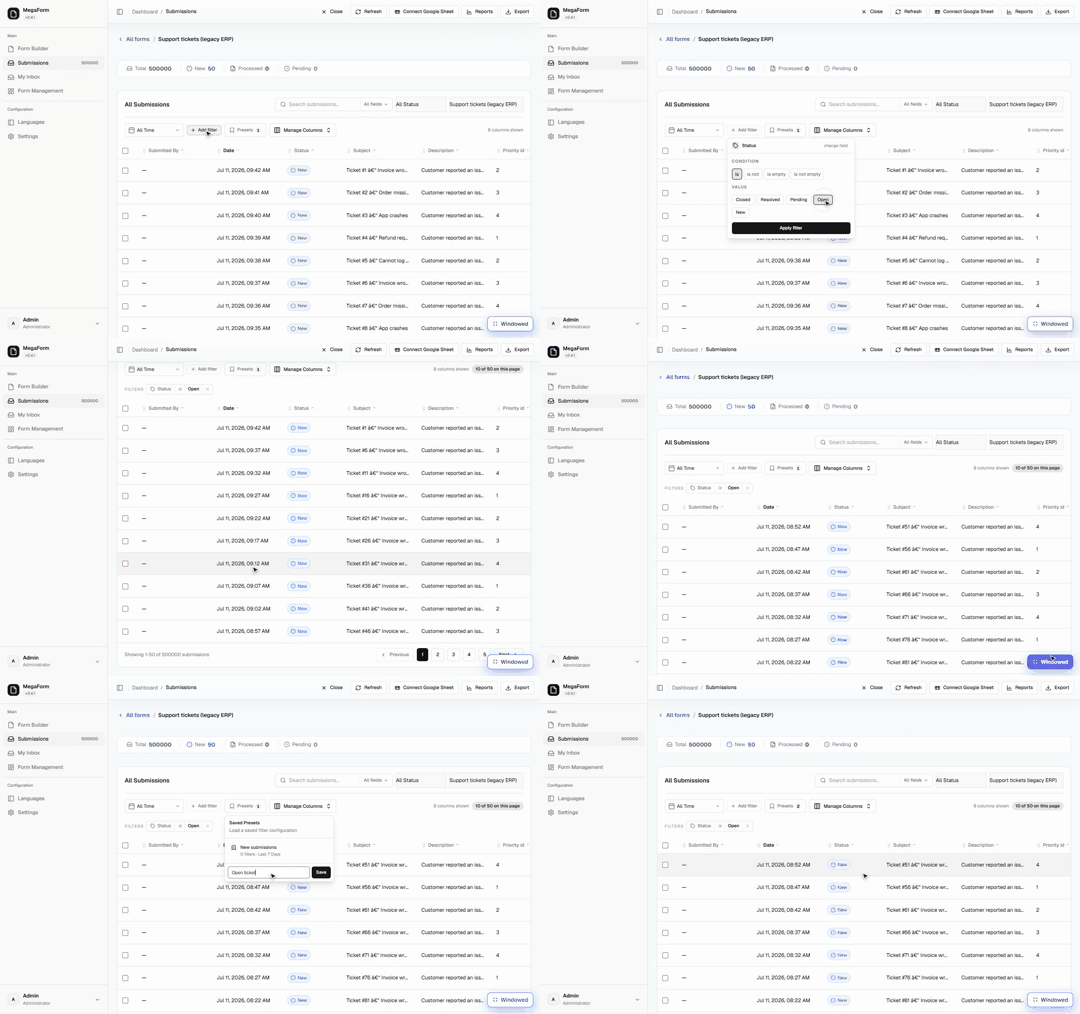
The example above is bound to a 500,000-row table. The grid fetches one page at a time rather than loading the entire dataset into the browser, so the record count does not make the page itself grow to 500,000 rows.
Treat the new form as a controlled migration instead of switching the external binding to edit mode:
- Inventory the source columns and the business rules that are not present in the data itself.
- Build the native MegaForm form with the Wizard, AI Designer, or a reviewed template JSON.
- Map each old column to a new field key and define validation, conditional logic, permissions, notifications, and workflow explicitly.
- If new submissions must also reach an existing system, configure a per-form database insert, webhook, or another supported integration.
- Test the old and new paths side by side with representative records, then perform the cutover.
For a low-risk rollout, start with a read-only binding to verify the source data and grid. Add the new write form only after the field mapping and business rules have been reviewed. Back up the source database before any separate migration or backfill operation.
What this means in practice
- Existing records: yes, MegaForm can display them in a grid directly from an approved SQL table or view.
- Schema generation: yes, MegaForm can generate a form schema from the discovered columns.
- Grid-like management view: yes, with search, filters, presets, columns, paging, and export.
- Automatic reconstruction of every old form rule: no; those rules must be reviewed and mapped.
- Editing arbitrary legacy rows: not assumed. The generated external binding is deliberately read-only; use a native MegaForm form and an explicit integration for the replacement write path.